




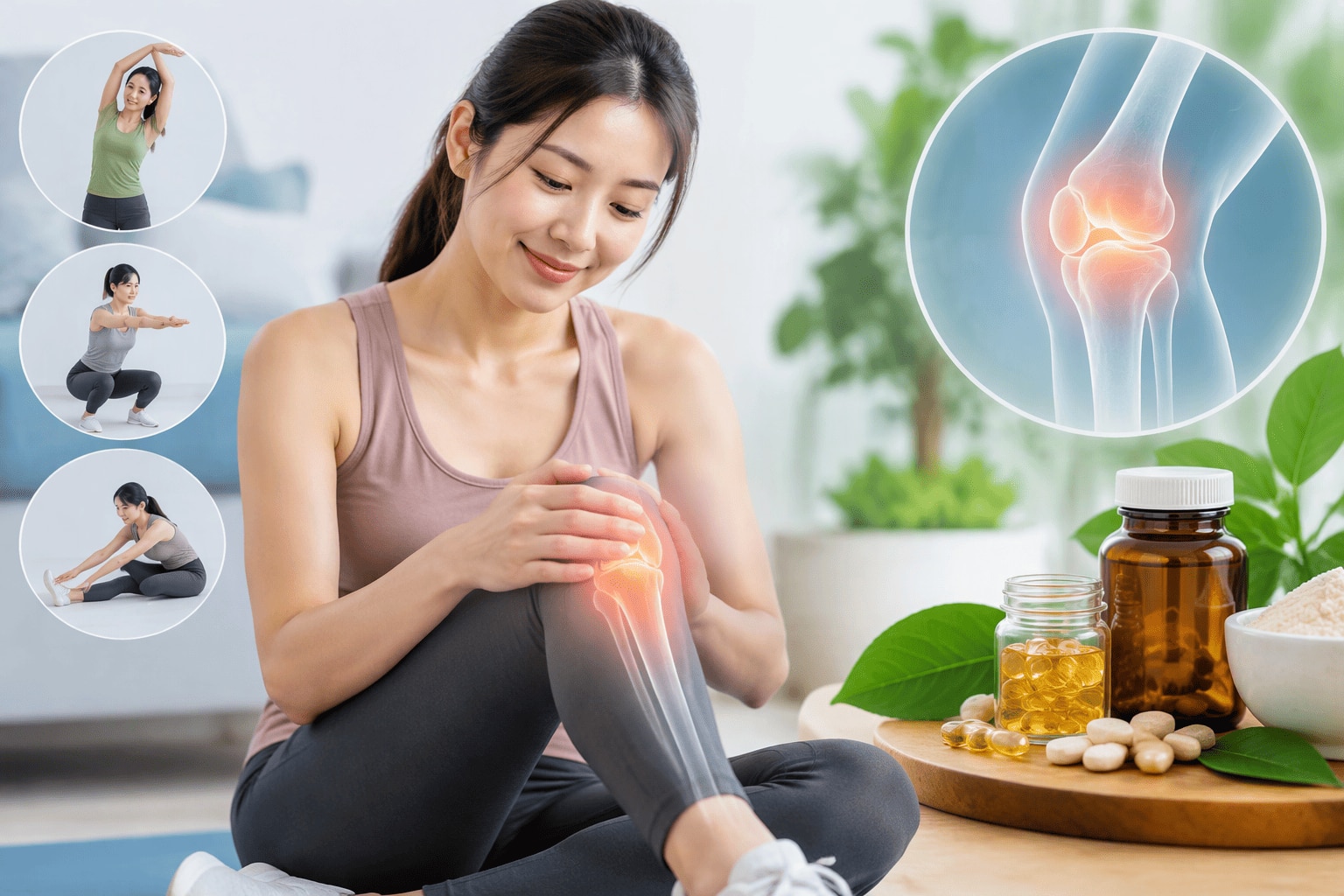
Joint pain can influence how you move, sleep and enjoy everyday activities. A mix of suitable exercises, good technique and supplements can ease discomfort and help you stay active. This guide will touch on common causes of joint pain as well as its management based on your needs.
Understanding Joint Pain and Seeking Advice
Joint pain usually arises from a few familiar sources. Wear and tear (osteoarthritis) gradually thins cartilage, leading to stiffness and a dull ache. Repetitive tasks or increasing your training intensity too quickly can irritate tendons and tissues around the joint. Inflammation—whether from other medical conditions such as rheumatoid arthritis or prior injuries —may cause swelling, warmth and morning stiffness. Typical symptoms include stiffness after rest, reduced range of motion and pain that worsens with certain activities.
Daily habits strongly influence joint comfort. Prolonged sitting, poor posture, unsupportive footwear, frequently carrying a heavy objects and inadequate recovery between workouts can aggravate symptoms. Small changes—regular movement breaks, ergonomic seating and gradual training progressions—reduce strain on knees, hips, back and shoulders. These adjustments, alongside exercises and supplements can help relieve joint pain and restore confidence in movement.
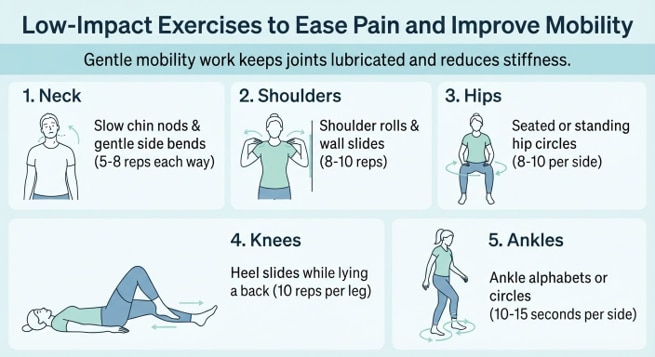
Low-Impact Exercises to Ease Pain and Improve Mobility
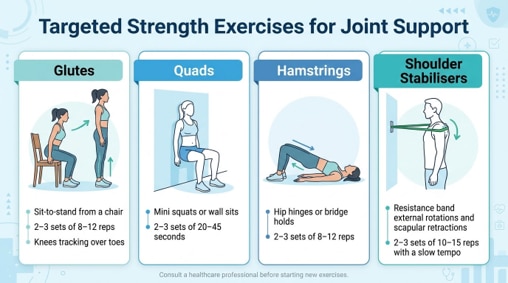
Strength work supports and stabilises joints by improving muscle control. Aim for 2–3 days per week:
Low-impact cardio boosts circulation and joint nutrition without excessive load
Choose to walk on level ground, cycle on a stationary bike, or swim or perform water aerobics. Start with 10–20 minutes, 3–5 days per week, building towards 150 minutes of moderate activity weekly. Start with a gentle warm-up to loosen your joints and muscles. At the end of your workout, finish with 3–5 minutes of easy movement plus light stretches for hips, thighs, calves and chest. These habits can help to reduce joint pain.
Safe Progression and Form Tips
Increase training gradually to avoid flare-ups. A practical guide is the 10% rule: add no more than 10% per week to total time, distance or sets. On days with increased soreness, reduce range, lower resistance or switch to a gentler option such as swimming.
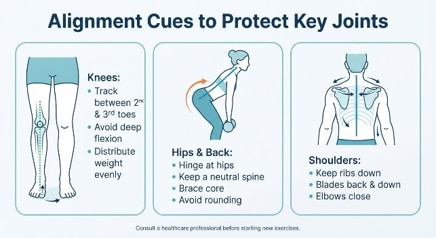
Use alignment cues to protect key joints
Simple tools can make training safer. A supportive mat cushions knees. Resistance bands provide joint-friendly loading—choose a light band and progress only when technique is solid. For recovery, apply cold packs for 10–15 minutes to calm a hot or irritated joint after activity, and use heat for 15–20 minutes to ease stiffness before mobility work. Protect skin with a cloth barrier and check sensation before use.
Supplements for Joint Support
| Supplement | Potential Benefit | Notes |
| Glucosamine + Chondroitin | Supports cartilage and comfort | Best taken consistently for several months |
| MSM | May reduce soreness and stiffness | Often paired with glucosamine |
| Curcumin | Helps control inflammation | Choose bioavailable forms with piperine |
| Collagen peptides | Supports connective tissue | Combine with vitamin C for synthesis |
| Omega-3s (EPA/DHA) | Supports joint function | Take with food to reduce reflux |
Typical daily amounts used in studies include:
Glucosamine sulphate: 1,500 mg
Chondroitin sulphate: 800–1,200 mg
MSM: 1,500–3,000 mg
Curcumin extract: 500–1,000 mg curcuminoids
Collagen peptides: 5–10 g
Omega-3s: a combined 1–3 g EPA + DHA
Introduce one supplement at a time for 8–12 weeks to gauge effect. Many shoppers consider joints health supplements alongside exercise so they can relieve joint pain more effectively.
Self-Care, Recovery, and When Pain Persists
If you take joint supplements, use them as part of a broader plan that includes regular exercise, good nutrition and adequate sleep. Supplements work best alongside these healthy habits and not as a replacement for them:
- Aim for a balanced diet rich in fruits, vegetables, lean protein and healthy fats to support overall joint health and overall recovery.
- Getting enough vitamin D, calcium and magnesium helps to support bones and muscles as well.
- Aim for a healthy body weight to reduce stress on knees and hips.
- Prioritise 7–9 hours of quality sleep for tissue repair.
- Manage stress with breathing exercises, mindful walks, or gentle yoga, as stress can heighten pain sensitivity.
- Ergonomic tweaks—adjusting chair height, using back supports, raising your screen to eye level, and choosing supportive footwear—reduce strain throughout the day.
- Use heat and cold strategically. Applying a cold pack after exercise helps soothe swelling or pain. Heat helps with morning stiffness or tight muscles before exercise.
- Plan rest and recovery with at least 24 hours between hard strength sessions for the same muscle group, and alternate joint loading (for example, cycle the day after a long walk).
- Seek professional advice if pain persists beyond a few weeks despite self-care, if function is declining, or if red flags appear. A physiotherapist can tailor exercises and progressions; a pharmacist can review supplement suitability; and a doctor can assess for underlying conditions.
Consistent, modest improvements indicate your plan is working and that your approach to joint pain: exercises and supplements for relief is on track.