





Hot flushes and irregular periods may be the best-known signs of menopause, but hormonal changes can affect almost every part of the body, from brain, mood, sleep to skin, joints, muscle, bladder and sexual health. Although less common, some women may experience symptoms such as heart palpitations, dry eyes, mouth, skin and gum disease. Understanding these symptoms can help you feel more prepared as you go through this natural part of life.
Menopause and Its Symptoms
Menopause is diagnosed after 12 consecutive months without a menstrual period, most often between ages 45 and 55. The transition phase beforehand is called perimenopause, when oestrogen and progesterone (hormones that regulate your menstrual cycle) fluctuate, triggering a wide range of symptoms.
Mild, occasional symptoms, such as dry skin or intermittent headaches, can usually be self-managed. Seek medical attention if you experience any of the following, as they may indicate health conditions other than menopause.
- Having undergone menopause with no bleeding for 12 months before starting to bleed again (even if very little).
- Menstrual periods occurring more frequently than every 3 weeks, heavy menstrual bleeding or spotting between periods.
- Persistent pelvic or abdominal pain.
- Unexplained weight loss.
- Red, painful or warm joints.
- Menopausal symptoms that affect your quality of life, such as disrupting your sleep, affecting your mood, or making it difficult to manage daily activities, work or family life.
10 Signs & Symptoms to Look Out For
Most symptoms begin in perimenopause and may continue after menopause (post-menopause). Symptoms associated with menopause may vary from minor to severe, and may be experienced over short or long time periods. Some symptoms include:
- Hot Flushes: Sudden, intense waves of heat—usually concentrated in the face, neck and chest—followed by sweating and flushed skin. This can happen many times during the day.
- Night Sweats: Severe, drenching sweating episodes that occur while sleeping.
- Sleep Disruptions: Hot flushes can wake you up in the middle of the night, while falling oestrogen levels can disrupt your normal sleep patterns, making it harder to fall asleep, stay asleep and wake up feeling rested. Restless legs, snoring and sleep-disordered breathing become more common during menopause and should be identified, as they are linked to significant health risks.
- Memory lapse: Temporary, mild cognitive symptoms characterized by forgetfulness, trouble concentrating or word-finding difficulties.
- Mood Changes: Emotional and psychological symptoms caused by fluctuating oestrogen and progesterone levels.
- Menopausal joint pain: New or worsening joint pain, stiffness or muscle aches that begin or become noticeably worse during menopause transition. These symptoms can affect several joints or muscle groups, making everyday activities less comfortable and impacting quality of life.
- Itchy skin: Falling oestrogen levels reduce collagen and elastin, thins the skin and weaken its moisture barrier. This can lead to dryness, itching, wrinkles, sagging and age spots, while some women may also notice oilier skin or acne.
- Weight gain: Age-related muscle loss can slow metabolism, while falling oestrogen levels make it more likely for fat to accumulate around the abdomen.
- Vaginal Dryness: Primarily caused by declining oestrogen levels, which lead to thinner, less elastic and drier vaginal tissues.
- Loss of libido: Significant decrease in sexual desire or interest primarily driven by the decline in reproductive hormones.
Adopting healthy lifestyle habits is one of the best ways to stay well during and after menopause.
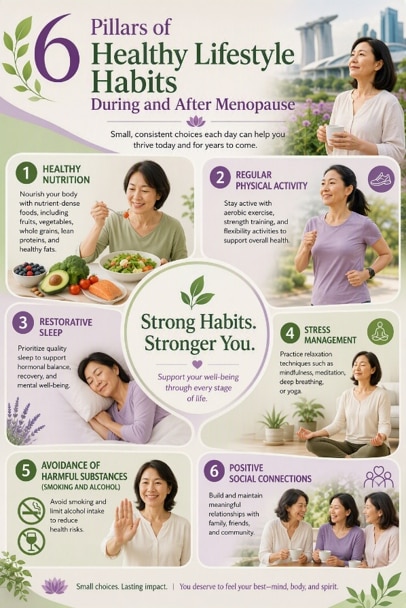
Adopt a balanced diet with plenty of colourful vegetables, fibre, lean protein and healthy fats. Reduce caffeine and spicy foods if they trigger your symptoms.
- Ensure adequate calcium and vitamin D for bone health.
- Aim for at least 150 minutes of moderate-intensity aerobic exercise (such as brisk walking, cycling or swimming) per week and resistance exercise/ strength training (such as lifting weights or using resistance bands) on two or more days per week. Together, these exercises strengthen your muscles and bones, improve your mood and sleep, keep your heart healthy and may also help reduce hot flushes.
- Manage stress with relaxation techniques. Remember to pause, hydrate and breathe.
- Get 6–9 hours of quality sleep each night. Good sleep hygiene helps lessen fatigue, mood changes and brain fog commonly experienced during menopause.
- If you smoke, quitting now can make a big difference to your health. It helps reduce your risk of heart disease, supports a healthier menopause transition and improves your overall quality of life.
- Limit alcohol intake to no more than one standard drink per day, as excessive alcohol may worsen hot flushes and sleep disturbances.
- Regular health screening helps detect chronic diseases and cancers early .
- Seek support from family, friends or menopause support groups if needed. Strong social support improves mental health, resilience and overall quality of life.
Some thoughtful daily choices that can complement your routine are:
- Dry eyes: Common problem with menopause and is caused by an inflammatory process within the lacrimal gland
. Use lubricating eye drops or gels labelled for dry eye relief.
- Mouth sensitivity or dryness: Hormonal changes can reduce saliva production, cause dry mouth while increasing the risk of plaque build-up and gum disease. Opt for SLS-free toothpaste or mild alcohol-free mouthwash and saliva-supporting products if dryness is persistent. Avoid spicy or acidic foods during flare-ups, drink water regularly and consult your dentist if you have bleeding gums, persistent ulcers or dental pain
- Joint or muscular discomfort: Consider over-the-counter pain relief such as paracetamol, anti-inflammatory pills or gels, supportive sleeves, and magnesium bath salts (Epsom salts) if you enjoy soaks.
- Body odour: Choose gentle deodorants and fragrance-free body wash to minimise odour.
- Dry & irritated skin: Use a gentle, fragrance-free cleanser, then apply a ceramide-rich moisturiser. Protect your skin with a broad-spectrum sunscreen with SPF 30 or higher every day before going out. For itchiness, choose body lotions with colloidal oatmeal, urea or ceramides. Keep showers short (<10mins) with lukewarm water and avoid harsh scrubs if you have acne-prone skin.
- Night Sweats: Optimize sleep environment by sleeping with a bedside fan/air conditioner and use cooling gel mattress covers. Wear loose, lightweight cotton or linen pyjamas. Limit caffeine in the late afternoon and avoid alcohol or spicy foods if they trigger your symptoms.
- Difficulty falling asleep: Keep the room cool and dark, maintain consistent bedtimes, reduce electronics use one hour and avoid vigorous exercise 2-3 hours before bed. Try stress-reduction techniques such as breathing exercises, short walks, yoga or mindfulness exercises.
- Increased urge to pass urine: Strengthen your pelvic floor with Kegel exercises and cut down on bladder irritants like alcohol, caffeine and carbonated drinks.
- Vaginal dryness, itching or irritation: Avoid bubble baths, scented soaps and vaginal douching. Wash the vulva with warm water alone or an unscented emollient as a soap substitute, then pat the area dry gently. Use vaginal moisturisers regularly to relieve dryness. Choose loose-fitting and cotton underwear and avoid tight pants or synthetic fabrics that trap heat and moisture.
Symptoms of perimenopause and menopause often reflect hormonal fluctuations and vary widely between people. Recognising the symptoms and understanding how to manage them can help you feel more prepared and in control.
Healthy lifestyle changes should be tailored to your individual needs, taking into account your health, symptoms, personal preferences and where you are in your menopause journey. While healthy habits can help manage symptoms and improve overall well-being, they are meant to work alongside medical treatments, such as menopausal hormone therapy, when these are recommended by your healthcare provider.